
Each year, tens of millions of roofs across North America and Europe are torn off and discarded long before the end of their genuine technical service life. The stripped materials are loaded into skips, transported to disposal sites, and deposited in landfills, where they will remain largely unchanged for generations. The replacement materials that take their place carry their own burden of embedded carbon, extracted from the earth, manufactured, shipped, and installed, before the cycle is set to repeat itself.
None of this is an unavoidable consequence of building upkeep. To a large degree, it reflects a material science problem for which a preventive answer already exists. A close look at why roofing surfaces break down ahead of schedule — examining the actual molecular and structural processes behind asphalt shingle deterioration — points clearly to a moment of intervention. That moment is the application of a protective surface treatment, delivered early, applied correctly, and formulated to work in harmony with the material rather than simply masking its condition.
This article approaches the problem of premature roof failure through the lenses of surface chemistry and environmental physics. It traces the chain of consequences from molecular degradation through to structural loss and wider environmental damage, and explains how advanced nano coating technology — in particular, Nasiol’s Z Series for mineral surfaces — can interrupt that chain before permanent harm sets in.
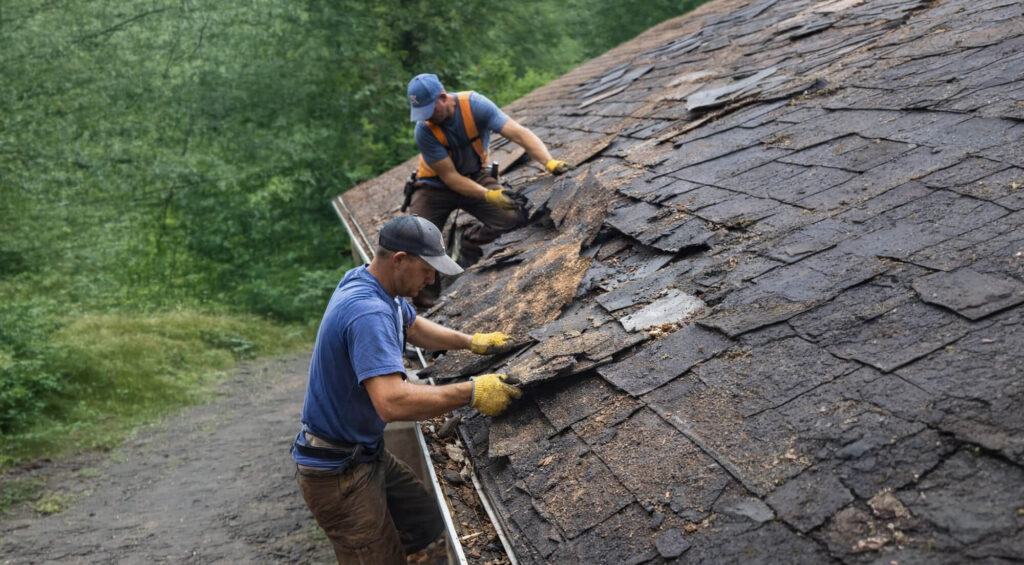
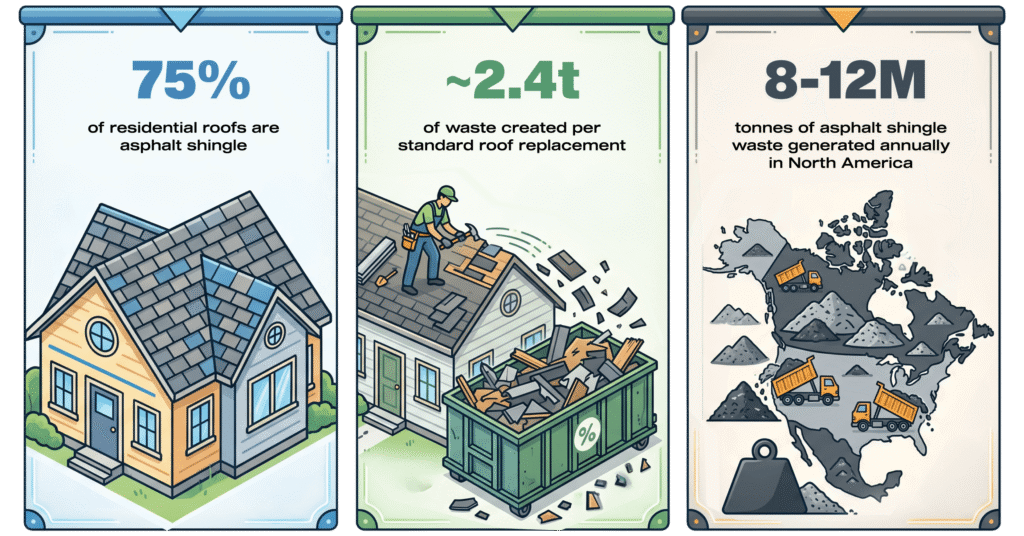
Asphalt shingles are the predominant roofing material throughout North America, accounting for roughly 75 percent of all residential rooftops. Their popularity reflects a practical balance of cost-effectiveness, ease of fitting, and acceptable durability under typical conditions. Yet the gap between their theoretical design life and the point at which they are actually replaced is striking, and that gap follows recognizable patterns.
Standard three-tab and architectural asphalt shingles are routinely specified with a service life of 20 to 30 years. In reality, the majority of shingle roofs in moderate to demanding climates are replaced within 12 to 17 years. In locations with intense UV exposure, humid coastal air, or frequent freeze-thaw cycles, that window can narrow further still.
The primary causes of this accelerated breakdown are not failures buried deep within the shingle’s structural matrix. They are surface-level phenomena — ultraviolet photo-oxidation, biological encroachment, moisture penetration, and thermal cycling — that systematically erode the outer layer until the material beneath is left exposed and vulnerable. Because these processes unfold gradually and compound upon one another, the damage often appears invisible until it has already advanced well beyond the point where targeted preventive treatment could be straightforwardly applied.
This is the core difficulty: the window for effective early intervention is generous, but the signs that typically prompt property owners to act tend to arrive only after considerable deterioration has already taken hold. By the time staining from algae, granule loss, surface cracking, or visible brittleness appear, a significant portion of the material’s working life has frequently been lost.
The question that underpins everything that follows is therefore not “when should a roof be replaced?” but rather “at what stage in the deterioration cycle does a protective treatment meaningfully change the outcome — and what is the material science that explains that protection?”
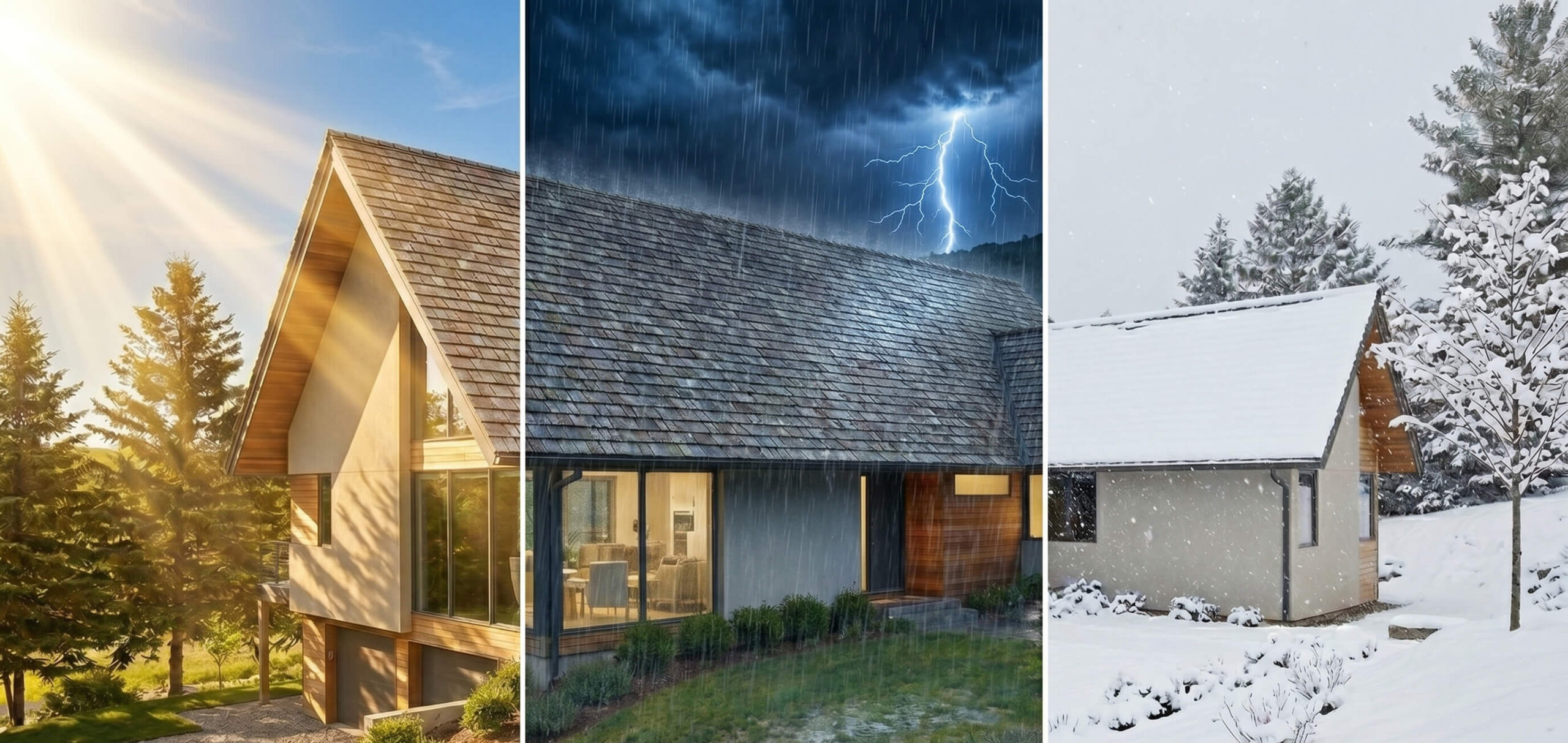
Understanding why roofs fail prematurely starts with understanding what asphalt shingles actually are — both chemically and physically — and what sustained environmental exposure does to that chemistry over time.
A conventional asphalt shingle is built from three primary components. At its core is a fiberglass or organic felt mat that delivers tensile strength and dimensional stability. This mat is saturated with asphalt, a viscoelastic hydrocarbon mixture derived from petroleum processing, which functions as both the primary waterproofing agent and the structural binding medium. Over this is applied a layer of ceramic-coated mineral granules, which serve a dual purpose: intercepting and scattering incoming ultraviolet radiation before it can reach the asphalt beneath, and giving the shingle its characteristic color and textured surface.
The performance of the entire assembly depends on the integrity of the asphalt binder and the completeness of granule coverage. When either is compromised, a cascade of degradation is set in motion.
The most consequential and least reversible force acting on asphalt shingles is ultraviolet radiation. UV light — specifically the UV-A and UV-B bands — carries enough photon energy to break the carbon-carbon and carbon-hydrogen bonds within asphalt’s complex hydrocarbon chains. This process, known as photooxidation, does not depend on direct damage to the granule layer to get started; even diffuse and reflected UV contributes to cumulative exposure over time.
As photooxidation advances, two parallel processes unfold. First, the volatile aromatic compounds and plasticizers within the asphalt binder — the molecules responsible for maintaining its flexibility and viscoelastic character — are expelled through a combination of oxidation and thermal volatilization. Since these compounds are what keep asphalt pliable through repeated heating and cooling, their departure causes the binder to stiffen and become progressively more brittle. At the same time, the oxidation products that form in their place — primarily carbonyl and sulfate groups — alter the surface chemistry of the asphalt, rendering it more water-attracting at precisely the moment when waterproofing performance is most needed.
The outcome of this paired process creates a recognizable pattern: UV exposure leads to bond fracture, which drives volatile loss, which produces embrittlement, which causes surface oxidation, which increases water absorption, which accelerates granule detachment, which opens the surface to deeper UV penetration, which drives further asphalt breakdown. Each link in this sequence amplifies the rate of those that follow.
The mineral granule layer represents the shingle’s first line of defence against ultraviolet radiation. As the underlying asphalt binder oxidizes and weakens its adhesive properties, the bond holding granules in place deteriorates. Granules begin to shed — a process visible as the dark, sand-like sediment that collects in gutters and downspouts during rain events. This shedding is not merely cosmetic. Every area where granules are lost directly exposes the asphalt below to unfiltered UV, accelerating photooxidation in those specific zones and establishing a reinforcing feedback loop: further oxidation generates further granule loss, which invites yet more oxidation.
Thermal cycling intensifies this damage. Asphalt shingles expand as temperatures rise and contract as they fall. Over the thousands of thermal cycles that accumulate across a roof’s working life, this mechanical stress generates micro-fractures at the surface — a phenomenon sometimes referred to as craze-cracking — that further destabilizes granule adhesion and creates pathways through which moisture can infiltrate.
Alongside UV-driven degradation, biological colonization — the establishment and spread of algae, moss, and lichen across roofing surfaces — constitutes a distinct but interacting degradation pathway that tends to be underestimated in assessments of roof service life.
The most frequently encountered colonizing organism on asphalt shingles in humid climates is Gloeocapsa magma, a cyanobacterium that produces a dark brownish-black pigment as protection against UV radiation. This pigmentation is the cause of the streaking and discoloration commonly visible on shaded or north-facing sections of roofs. Beyond the visible staining, the biological matter itself damages the surface through a range of mechanisms.
Algae colonies hold moisture against the shingle surface, prolonging water contact that would otherwise be limited by the roof’s slope and drainage. Lichen, a structurally more complex organism, can penetrate the granule layer with root-like rhizine structures that physically displace granules as the organism grows and then contracts. Moss accumulation, particularly in gutters and at flat roof junctions, creates zones of standing water that heighten freeze-thaw risk in colder climates.
Biological colonization on roofing surfaces should therefore be understood as an amplifier of degradation rather than a self-contained issue. It intensifies moisture-related damage, contributes to granule loss, and creates conditions that invite further biological growth. Addressed at an early stage, it is largely preventable. Once established, it requires targeted removal before surface protection can be reliably applied.
Once photooxidation has sufficiently hardened the asphalt surface and granule loss has opened direct exposure pathways, moisture begins penetrating the body of the shingle itself. This marks the shift from surface deterioration to structural failure. Water absorbed into the shingle matrix undergoes freeze-thaw cycling in colder climates, with each freezing expansion widening pre-existing micro-fractures. In warmer, humid environments, persistent moisture within the shingle promotes sub-surface biological activity and accelerates the chemical decomposition of whatever asphalt binder remains.
Once moisture infiltration has become established, the damage transitions from cosmetic to structural, and the available response options narrow accordingly.
The consequences of this degradation sequence extend well beyond the immediate cost of repairs or replacement. They accumulate across three distinct cost categories: financial, environmental, and carbon.
A complete residential roof replacement in North America typically runs from $8,000 to $25,000, depending on roof size, material specification, and local labour rates. When that replacement happens five to ten years before the material has genuinely reached the end of its technical life, the financial loss is directly proportional to the unused service potential of the existing roof.
For commercial properties, institutional buildings, and multi-unit residential developments, the numbers scale considerably. A single quoted figure obscures the true cost calculation, which should account for the remaining performance years in the existing material at the point of replacement.
Secondary financial costs — interior water damage during the failure period, disruption to building occupants, scaffolding and access expenses — add to the direct replacement figure in ways that rarely feature in upfront quotations.
Roofing is one of the most significant sources of construction and demolition waste. In North America, asphalt shingle waste accounts for an estimated 8 to 12 million tonnes annually. The overwhelming majority of this material goes directly to landfill, where asphalt shingles break down over a timeframe measured in centuries.
Each standard residential roof replacement generates approximately 2.4 tonnes of waste material — old shingles, underlayment, packaging, and associated debris. Multiplied across the millions of roofs replaced each year — a meaningful proportion of which are replaced prematurely — the cumulative landfill burden is significant.
This problem differs structurally from, for example, consumer packaging waste, because each individual event generates a large and concentrated waste stream, and because the replacement cycle is driven not by genuine material failure but by surface degradation that is, in many cases, preventable or at least substantially delayable through appropriate surface treatment.
The industrial parallel to this problem is well understood in sectors such as infrastructure coating, marine anti-fouling, and architectural facade protection, where preventive surface treatment is standard practice precisely because the cost of replacing the substrate far outweighs the cost of periodic surface maintenance. The roofing sector — particularly the residential segment — has been slower to embrace this logic. The material science case for doing so, however, is identical.
The carbon footprint of a roof replacement is rarely discussed in the context of homeownership or property management, yet it is both measurable and substantial. Producing asphalt shingles is an energy-intensive undertaking: raw asphalt must be refined, modified, and processed; fiberglass or felt base mats must be manufactured; ceramic granule coatings must be applied. Published lifecycle assessments indicate that asphalt shingle production generates between 350 and 500 kilograms of CO₂ equivalent per tonne of material.
of CO₂ emitted per tonne of asphalt shingle production. A complete roof replacement can account for 3 to 5 tonnes of CO₂ emissions when manufacturing, transport, removal, and reinstallation are considered together.
A complete roof replacement — taking into account new material production, delivery to site, removal and disposal of existing shingles, and reinstallation — generates an estimated 3 to 5 tonnes of CO₂ equivalent in total. To place that figure in context: 3 to 5 tonnes of CO₂ is roughly equivalent to the annual carbon output of driving a mid-size passenger car, or of a return transatlantic flight for two people.
Preventing a single premature roof replacement therefore delivers a carbon saving of that order of magnitude. Across the millions of roofs replaced prematurely each year in North America alone, the aggregate carbon opportunity of extending service life through preventive surface protection is both substantial and measurable against climate targets in a way that few other building maintenance choices can match.
The degradation mechanisms outlined earlier — photooxidation, granule detachment, biological encroachment, moisture infiltration — are sequential and interdependent. This matters for any mitigation strategy because it means that intervening at any point in the chain slows the rate of all subsequent stages, and that early-stage intervention has a disproportionately large effect on the overall outcome.
Nano coating technology, applied to roofing surfaces at the right moment in their service life, functions as precisely this kind of upstream intervention.
A nano coating is not a paint, a sealant, or a film in any conventional sense. It is an ultra-thin molecular layer — measured in nanometres — that bonds directly to the substrate through chemical interaction with that surface’s chemistry. Because it operates at this scale, it does not alter the visual appearance of the surface, does not add appreciable weight or thickness, and does not impede the natural vapour transmission of the substrate. These characteristics are critical in a roofing context, where any treatment that trapped moisture within the shingle body would accelerate rather than prevent deterioration.
The primary effect of a hydrophobic nano coating on asphalt shingles is to produce a high-contact-angle surface — one on which water forms near-spherical droplets and rolls free rather than spreading, soaking in, or pooling. This behaviour, sometimes described in surface chemistry literature as the lotus effect, is achieved by modifying surface energy at the nanoscale. By substantially reducing the roofing surface’s affinity for water, the coating interrupts the moisture retention cycle that enables both biological colonization and freeze-thaw damage.
A well-formulated oleophobic and hydrophobic nano coating for mineral surfaces also reduces the adhesion of airborne particulates, organic debris, and the biological spores responsible for initiating algae and lichen growth. Because the surface energy is low, contaminants are less likely to take hold and more likely to be cleared by rainfall. This is the mechanism behind the self-cleaning behaviour observed on nano-coated surfaces — not that the coating actively cleans the surface, but that the altered surface chemistry makes retaining contaminants structurally unfavourable.
Advanced nano coatings formulated for exterior mineral surfaces can also incorporate UV-blocking chemistry — molecular components that absorb incoming ultraviolet radiation at the surface layer, reducing the photon energy available to drive photooxidation in the asphalt below. This UV mitigation does not substitute for the protection the granule layer provides, but augments it, effectively introducing a secondary UV defence at the outermost surface of the system.
Because photooxidation is the primary driver of volatile loss and embrittlement in asphalt shingles, reducing UV penetration even partially slows the pace at which the binder loses its plasticizing compounds. The practical consequence is that the shingle retains its flexibility and adhesive properties — including its capacity to keep granules in place — for a longer period, which in turn delays the reinforcing feedback loop between granule loss and accelerated UV degradation.
Any protective treatment applied to a roofing surface must preserve the vapour permeability of the substrate. Asphalt shingles naturally allow a modest but meaningful degree of vapour transmission, which prevents moisture from building up within the shingle structure or the roof assembly below. A coating that sealed this vapour pathway would trap moisture, accelerating the very degradation it is intended to prevent.
This requirement sets professional-grade nano coatings apart from simpler film-forming products such as acrylic roof coatings or bituminous sealants. A nano coating applied at the molecular scale to mineral surfaces leaves the micro-porosity of the substrate intact, permitting vapour to diffuse through while presenting a hydrophobic barrier to liquid water. This is not a marketing claim — it is a direct consequence of the coating’s nanoscale architecture, and it is the reason substrate breathability is one of the key technical requirements when formulating nano coatings for mineral and absorbent surfaces.
Nasiol Z-WB is the water-based formulation within Nasiol’s Z Series — a range of industrial nano coatings developed specifically for absorbent mineral surfaces, including asphalt shingles, clay and concrete tiles, and stone shingles. The Z Series emerged from Nasiol’s R&D programme at the Artekya Technology facility in Gebze, Turkey, and is now used in roofing applications across more than 140 countries.
The water-based formulation offers specific technical advantages in roofing contexts. Unlike solvent-based alternatives, Z-WB generates no hydrocarbon runoff during or after application, removing any risk of soil contamination or damage to vegetation near the treated building. It is a low-VOC product, compliant with REACH certification standards — an increasingly mandatory requirement for commercial and institutional roofing contracts where environmental compliance documentation is expected.
Once applied using an HVLP spray system — the recommended method for achieving consistent coverage across complex roof surfaces — Z-WB forms an invisible hydrophobic and oleophobic layer bonded to the mineral surface. The product’s consumption rate of approximately 60 to 90 millilitres per square metre is calibrated to deliver full surface coverage without excess material accumulation. At this rate, a 200-square-metre residential roof requires between 12 and 18 litres of product — a volume that is readily manageable for a professional roofing contractor equipped with standard spray apparatus.
The protective properties of Z-WB address each of the primary degradation vectors identified earlier. Water repellency reduces moisture retention and disrupts the conditions that favour biological colonization. Oleophobicity limits the adhesion of airborne organic particulates. The invisible surface layer reduces the rate of surface contamination without altering the visual character of the shingle. And because the coating preserves the natural breathability of the mineral substrate, it does not create a moisture trap within the shingle body or the roof assembly.
Applied to a roof in sound structural condition — typically during the 3 to 10 year window following installation, before significant granule loss or shingle embrittlement has set in — Z-WB treatment constitutes a targeted intervention at the earliest stages of the degradation sequence. This timing is significant: early treatment addresses the surface before the reinforcing feedback loops between UV damage, granule loss, and moisture infiltration have had opportunity to take hold.
For aging roofs where some deterioration has already occurred, the treatment continues to provide meaningful protection for the remaining sound material, slowing the rate of further decline and potentially extending the functional service life of the existing structure by several years beyond what would otherwise be achievable.
The rationale for preventive nano coating treatment on roofing surfaces is not specific to the residential market. It reflects a principle firmly established across industrial and architectural surface protection: that maintaining a barrier at the outermost layer of a material system is orders of magnitude more efficient, less costly, and less environmentally damaging than allowing substrate degradation to progress to the point where structural replacement becomes unavoidable.
In industrial environments — chemical processing plants, marine infrastructure, bridges, and building facades — this principle is applied as standard practice through anti-corrosion coatings, anti-fouling treatments, and hydrophobic surface protection. The same material science logic applies equally to residential and commercial roofing surfaces. The difference lies not in the underlying physics, but in the historical expectations of the roofing market.
As sustainability requirements embedded in building codes, green certification programmes such as LEED and BREEAM, and carbon disclosure frameworks increasingly demand documented evidence of whole-life environmental performance, the case for preventive surface treatment as a recognised maintenance strategy is growing. The capacity to demonstrate a measurable extension of roof service life — and the corresponding reduction in replacement-cycle carbon and waste — is directly relevant to sustainable building certification, ESG reporting for commercial property owners, and the broader goal of reducing construction waste throughout the built environment.
The ideal window for applying a hydrophobic nano coating to asphalt shingles is during the early-to-mid phase of the roof’s service life, generally between 2 and 10 years after installation. At this stage, the granule layer is still largely intact, the asphalt binder retains its flexibility, and the surface has not yet accumulated significant photooxidation damage. Treatment at this point provides the most comprehensive protection against the degradation mechanisms described above. For older roofs, treatment still delivers benefit by protecting the remaining sound material, though the anticipated extension of service life will be proportionally shorter given the degradation that has already taken place.
A correctly formulated nano coating for mineral surfaces operates at a molecular scale and does not obstruct the micro-porosity of the substrate. Vapour continues to diffuse through the treated surface, preventing moisture from accumulating within the shingle structure. This is a fundamental requirement for any protective treatment applied to roofing materials, and it represents a key technical distinction between nano coatings and film-forming products such as acrylics or bituminous sealants, which can restrict vapour transmission. Nasiol Z-WB is specifically formulated to maintain substrate breathability while providing hydrophobic and oleophobic surface protection.
Biological colonization on roofing surfaces causes damage through two principal mechanisms. First, algae and moss retain moisture against the shingle surface, extending water contact time and increasing the risk of moisture infiltration and freeze-thaw damage. Second, lichen structures physically penetrate the granule layer, displacing granules mechanically as the organism expands and contracts. Since granule coverage is the shingle’s primary UV defence, any granule loss accelerates the photooxidation cycle in the exposed areas. The low-energy, hydrophobic surface produced by nano coating treatment reduces the likelihood of biological colonization by eliminating the moisture conditions and surface adhesion characteristics that favour the establishment of these organisms.
The full lifecycle of a roof replacement — encompassing new material manufacturing, transport to site, removal of existing materials, and reinstallation — generates an estimated 3 to 5 tonnes of CO₂ equivalent. This figure accounts for the energy intensity of asphalt shingle production (approximately 350 to 500 kilograms of CO₂ per tonne of material) as well as the logistics and labour involved. Every premature roof replacement — one that occurs before the material has genuinely reached the end of its technical life — incurs that full carbon cost unnecessarily. Scaled across millions of annual replacements in North America alone, the cumulative carbon impact of premature roof replacement is a significant and largely unquantified contributor to the construction sector’s climate footprint.
Yes, directly. The mechanism is straightforward: if nano coating treatment extends the functional service life of an asphalt shingle roof by several years — by slowing UV degradation, moisture infiltration, and biological colonization — the number of replacement cycles over a building’s lifetime decreases proportionally. Each replacement cycle avoided prevents approximately 2.4 tonnes of shingle waste from entering the waste stream. Across a portfolio of commercial or institutional buildings, the waste reduction potential of a systematic preventive surface protection programme is both material and documentable.
Nasiol Z-WB is a water-based, low-VOC formulation holding REACH compliance certification. Unlike solvent-based or oil-based alternatives, it produces no hydrocarbon runoff during application or as a result of rain washing the treated surface. This makes it suitable for use on buildings in close proximity to gardens, drainage systems, and water features without risk of soil or surface water contamination.
The primary distinction lies not in the protective mechanism — both aim to create a hydrophobic surface — but in the environmental profile, application logistics, and post-application behaviour. Solvent-based coatings carry higher VOC loads, present greater environmental risk from runoff, and in some climates can affect surrounding vegetation during application. Nasiol Z-WB’s water-based chemistry eliminates these risks while delivering equivalent surface protection across the target substrate materials — asphalt shingles, clay tiles, concrete tiles, and stone shingles.
The argument made in this article is not principally about a product. It is about the logic of where and when to intervene in a material deterioration process that, left unchecked, generates substantial financial waste, landfill burden, and carbon emissions — and that can be significantly slowed by a well-timed, well-formulated surface treatment.
The science of asphalt shingle degradation is well established. Photooxidation breaks down the hydrocarbon binder. Volatile loss causes embrittlement. Granule detachment exposes the substrate to intensified UV damage. Moisture infiltration and biological colonization compound these effects. Once the full cascade is established, it becomes difficult and costly to reverse.
What nano coating technology offers is an interruption of that cascade at its earliest, most accessible stage — the surface. By modifying the surface energy of the mineral roofing material, a hydrophobic, oleophobic nano coating fundamentally changes the relationship between the substrate and its environment: water rolls away rather than soaking in, contaminants fail to take hold, biological colonizers find no moisture to establish themselves, and UV radiation is partially absorbed at the outermost layer.
Nasiol’s Z-WB formulation delivers this intervention in a water-based, REACH-compliant format designed for professional application across asphalt shingles, clay and concrete tiles, and stone shingles. Applied within the optimal treatment window, it represents one of the highest-value maintenance decisions available for any mineral-surface roof system — not because it replaces the need for structural inspection and upkeep, but because it extends the period over which the existing material continues to perform its intended function.


